

Every run is built one stride at a time. Progress comes from ordinary sessions repeated consistently, not only from races and personal bests. Skin discomfort can interrupt that consistency when repeated rubbing turns an enjoyable run into a painful experience. Choosing the best anti chafe running protection helps create a routine in which comfort receives the same attention as shoes, hydration and recovery.
Chafing is common, but it does not have to define your training. Learning where friction begins and preparing before movement can help protect each stride.
Every Runner Has Different Hotspots
There is no universal chafing pattern.
One runner may experience inner-thigh rubbing. Another may struggle with nipple irritation during long sessions. Sports bras, waistbands, socks, hydration packs and underarm seams can all create different contact points.
Your personal hotspots may include:
-
Inner thighs
-
Groin
-
Nipples
-
Chest
-
Underarms
-
Side body
-
Bra line
-
Waist
-
Feet
-
Neck
-
Shoulders
Pay attention to mild warmth or tingling rather than waiting for pain.
Friction Builds Gradually
Chafing is rarely caused by one stride. It develops through repetition.
As the run continues:
-
Clothing becomes damp.
-
Salt remains on the skin.
-
Fabric moves repeatedly.
-
Feet can swell.
-
Posture can change with fatigue.
-
Equipment may loosen.
-
Seams may become more noticeable.
This is why prevention matters even when the beginning of a run feels completely comfortable.
Make Skin Protection Part of Your Routine
A dependable anti chafing cream for runners should be applied before exercise rather than after the skin is sore.
A repeatable routine can be simple:
-
Check the day’s distance and weather.
-
Identify likely hotspots.
-
Dry the skin fully.
-
Apply an even protective layer.
-
Put on tested running clothes.
-
Adjust every strap and waistband.
-
Carry a top-up for long sessions.
-
Change out of wet clothing after finishing.
Completing these steps regularly can make prevention feel automatic.
Protect the Thighs
Thigh chafing can affect runners of different body types. It may come from skin contact, moving shorts or rough inner seams.
Apply protection across the complete area of contact. Choose shorts or tights that remain in place without excessive compression.
Do not assume longer shorts automatically solve the problem. The lower edge of the garment can itself become a friction point.
Protect the Chest and Underarms
Running shirts move as the arms and upper body work. Damp fabric may increase nipple or underarm irritation.
Check for:
-
Rough logos
-
Heavy cotton materials
-
Loose arm openings
-
Side seams
-
Race-number fasteners
-
Wet fabric
-
Hydration-vest edges
Use tested clothing and apply protection before dressing.
Protect the Bra Line
Supportive clothing should remain secure without creating painful pressure.
Test sports bras during sessions that match the expected race duration. Check the lower band, shoulder straps, side panels and fastenings.
Avoid relying only on how the garment feels while standing still. Running introduces repeated movement that cannot be assessed in a fitting room.
Protect the Feet
Feet can experience both chafing and blister-forming friction.
Helpful habits include:
-
Wearing properly fitting shoes
-
Testing socks over longer distances
-
Smoothing out folds
-
Keeping feet as dry as practical
-
Protecting known hotspots
-
Changing wet socks during long events
-
Gradually breaking in new footwear
Do not begin a major event in brand-new shoes.
Protect Equipment Contact Points
Hydration packs, belts and phone holders should move with the body rather than bounce against it.
Adjust equipment while it contains the intended race or training load. A vest may fit differently after bottles are filled.
Secure loose straps and keep hard objects away from direct skin contact. Apply protection where the equipment has caused previous irritation.
Choose a Format That Encourages Consistency
Creams, balms, sticks, powders and tapes offer different advantages. The right format should suit the size and location of the hotspot.
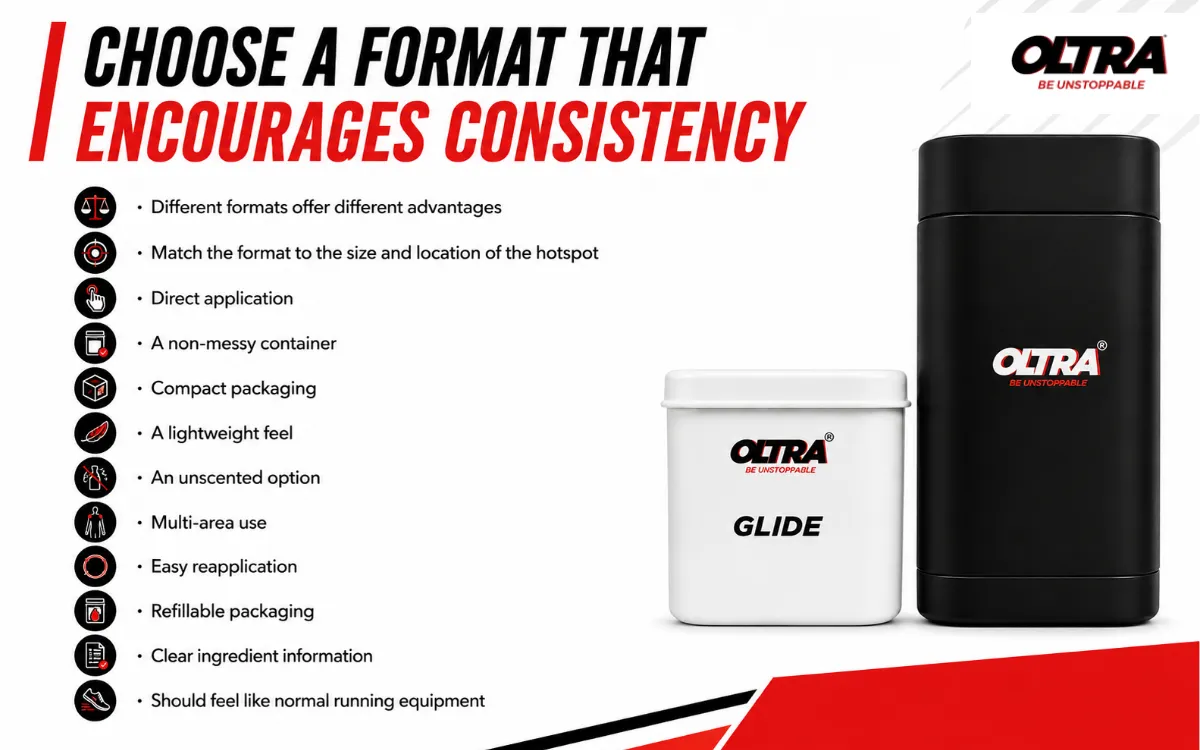
A runner may value:
-
Direct application
-
A non-messy container
-
Compact packaging
-
A lightweight feel
-
An unscented option
-
Multi-area use
-
Easy reapplication
-
Refillable packaging
-
Clear ingredient information
The product should feel like a normal piece of running equipment rather than an inconvenient extra.
Why Choose Oltra?
Oltra develops plant-based performance products for active lifestyles. The brand positions its products around natural alternatives, movement and daily confidence.
Oltra Glide is its refillable anti-chafe balm for running, walking, cycling, training and everyday friction. The reusable twist-up applicator is designed for direct application on the thighs, underarms, chest, nipples, feet, groin, neck, waist and bra line.
Each starter pack includes one reusable applicator and one 40g refill. Oltra describes the balm as plant-based certified, vegan, cruelty-free, made in Britain and free from aluminium, parabens and petroleum.
Four unisex scent profiles are available. Runners who prefer an unscented formula can select Core, while Rise, Spark and Flow provide alternative scent choices.
The refill system allows the external applicator to remain in use when the internal balm needs replacing, making it suitable for repeated training preparation.
Listen to the Skin
Motivation should not require ignoring broken or severely irritated skin.
When chafing begins:
-
Stop the rubbing source.
-
Adjust clothing or equipment.
-
Reapply protection before the skin breaks.
-
Clean existing irritation gently.
-
Pat the area dry.
-
Wear loose clothing during recovery.
-
Rest when movement reopens the skin.
Seek medical advice when symptoms worsen, spread, produce discharge or do not improve.
Find Protection That Supports Your Goals
The best cream for chafing should help you train confidently without requiring a complicated process. It should suit your hotspots, clothing, distance and values while remaining easy to use week after week.
Conclusion
Protecting every stride does not require an elaborate routine. It requires awareness, preparation and consistency.
Choose clothing that works, adjust your equipment, identify your hotspots and apply protection before running. When avoidable friction is removed, every stride can contribute more comfortably towards your next goal.
