

A good run can quickly become uncomfortable when repeated rubbing begins to irritate the skin. This problem is particularly common during longer sessions, warm weather and high-sweat workouts. Using an anti chafing cream for runners before movement can help reduce the friction caused by skin, clothing and running equipment.
Preventing chafing is not only about buying a product. Runners also need to understand their individual hotspots, select suitable clothing and develop a preparation routine that works across different distances and conditions.
Understanding Running-Related Friction
Running involves continuous repetition. Your thighs move past each other, your arms swing beside your body and your clothes shift slightly with every stride. A small amount of rubbing may feel harmless at the beginning, but the effect can build over thousands of movements.
Moisture adds another challenge. Sweat can cause fabric to cling, fold or become heavier. Wet skin may also be more vulnerable to repeated contact. This explains why a familiar running outfit can feel comfortable during a cool 5K but cause irritation during a humid long run.
Chafing is commonly associated with:
-
Long-distance road running
-
Trail running with hydration equipment
-
Treadmill sessions in warm indoor spaces
-
Marathon and ultramarathon training
-
Running in rain or humid weather
-
Wearing new clothing during exercise
-
Carrying belts, phones or water bottles
-
Returning to running after a break
Anyone can experience the problem, regardless of pace, body size or experience.
Identify Your Personal Chafing Hotspots
The first step towards friction-free running is identifying where the problem begins.
Inner Thighs
Thigh chafing can result from skin-on-skin contact or from shorts moving during exercise. The risk may increase when fabric becomes damp.
Chest and Nipples
The chest can be affected when a shirt repeatedly brushes the skin. Distance runners may notice this more often because the fabric moves thousands of times during one session.
Underarms and Side Body
The combination of arm swing, sweat and side seams can create irritation around the underarm or rib area.
Sports Bra Areas
The band, straps and seams of a sports bra can create pressure and friction. A supportive fit is important, but a garment that is too tight can also become uncomfortable.
Feet
Friction around the toes, arches and heels can lead to painful hotspots or blisters. Shoe fit, sock choice and moisture management are all important.
Waist and Shoulders
Belts, waistbands, hydration vests and backpack straps can move as the runner changes pace or direction.
Keep a simple record of any soreness after training. Over several runs, you may notice patterns connected with particular garments, distances or weather conditions.
Build a Pre-Run Anti-Chafing Routine
Consistency is more effective than waiting for a problem to appear. Add skin protection to the same routine as tying your shoes, checking your watch and filling your water bottle.
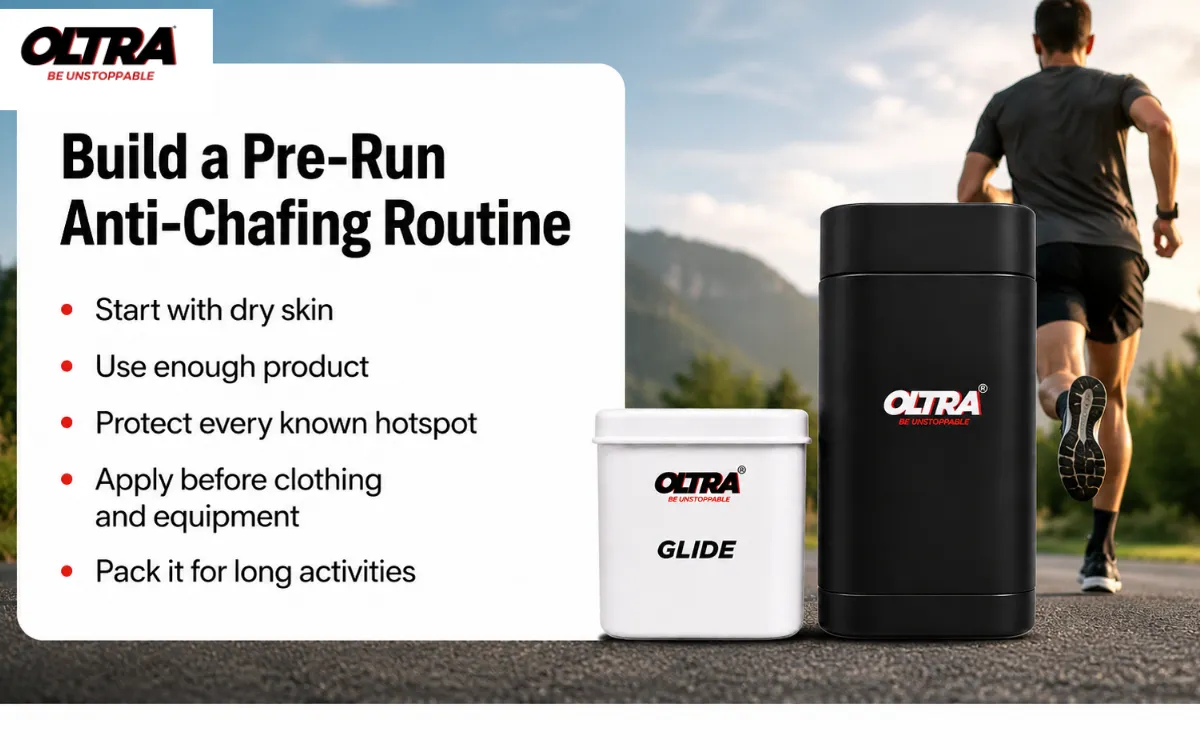
Start with Dry Skin
Apply the product to clean, completely dry skin. Moisture beneath the formula can make application less even.
Use Enough Product
A very thin, incomplete layer may not cover the entire contact zone. Apply several passes where necessary and extend slightly beyond the area that usually becomes sore.
Protect Every Known Hotspot
Do not focus only on the most obvious location. A long run may reveal secondary problems around the underarms, chest, feet or waist.
Apply Before Clothing and Equipment
It is usually easier to cover the skin fully before putting on fitted shorts, a sports bra, running belt or hydration vest.
Pack It for Long Activities
A portable product allows you to top up protection during a marathon, ultramarathon or long trail session.
What Makes a Good Runner-Friendly Formula?
A runner does not need a product that simply feels smooth for a few seconds. The formula must remain comfortable during movement and work with the rest of the running kit.
A useful chafing cream for runners should create a consistent layer over the skin without becoming a distraction. Runners who train several times each week should also consider how easy the product is to use repeatedly.
Important qualities include:
-
Smooth and controlled application
-
A lightweight skin feel
-
Coverage across large and small areas
-
Convenient packaging
-
Suitability for different body areas
-
Easy transport in a race vest or bag
-
Clear usage directions
-
Ingredients that suit the user’s preferences
-
An unscented option for fragrance-sensitive users
-
Packaging designed for repeated use
Some people prefer creams, while others prefer a balm or stick. The application style matters because the easiest product to use is more likely to become part of a reliable routine.
Choose Better Running Clothing
No anti-chafe product can fully correct clothing that is consistently rough, poorly fitted or unsuitable for the conditions.
Select Moisture-Managing Fabrics
Technical fabrics are generally designed to move moisture away from the skin and dry more quickly than heavy everyday materials.
Inspect Seams
Flat seams can reduce concentrated rubbing. Check the inner thighs, underarms, bra line and waistband carefully.
Find a Secure Fit
Loose fabric may move excessively, while clothing that is too tight may dig into the body. Aim for a secure fit that allows unrestricted movement.
Test Before Increasing Distance
A garment that works for 20 minutes has not necessarily been proven for two hours. Test clothing gradually as training distance increases.
Be Careful with New Kit
Do not wear an entirely new outfit for a race. Use important clothing, socks and accessories during training first.
Distance-Specific Preparation
Different runs require different levels of planning.
Short Runs
For short, easy sessions, apply protection to established hotspots. These runs are also useful for testing new products.
Long Runs
Cover every known friction area, wear tested clothing and carry a small product when practical. Check whether belts and packs move when fully loaded.
Speed Sessions
Faster movement can increase fabric movement. Make sure shorts, bras and tops stay secure when your pace changes.
Trail Runs
Trail runners often carry more equipment and remain active for longer. Protect the shoulders, neck, waist and other areas touched by a vest or pack.
Race Day
Use only products and clothing already tested together. Apply protection generously and early rather than rushing shortly before the start.
Common Mistakes Runners Make
Even experienced runners can overlook simple details.
Avoid these errors:
-
Applying protection only after irritation begins
-
Covering too small an area
-
Using a new product for the first time on race day
-
Ignoring socks and feet
-
Assuming cool weather eliminates the risk
-
Wearing damp clothing for too long after running
-
Forgetting that equipment straps can also chafe
-
Continuing to run through severe pain
-
Applying cosmetic products to open wounds without guidance
Cool weather does not guarantee a chafe-free run. Longer distances, wet conditions and additional layers can still create friction.
About Oltra and Oltra Glide
Oltra is a British wellness brand focused on natural performance products for active everyday life. Its Oltra Glide anti-chafe balm is designed for runners, cyclists, walkers, gym users and people who experience friction during work or travel.
The product comes in a direct-application, refillable format. The starter pack includes a reusable applicator and a 40g refill. Oltra describes the formula as plant-based certified, vegan, cruelty-free and free from aluminium, parabens and petroleum. Runners can apply it to areas including the thighs, underarms, chest, nipples, feet, waist and bra line.
The reusable system can also appeal to runners who would prefer to replace the product refill rather than regularly discarding a complete applicator.
When Irritated Skin Needs More Attention
Mild irritation often improves when the friction stops and the area is kept clean and dry. Avoid tight clothing while the skin recovers.
Seek professional advice if the irritation becomes severe, produces discharge, feels increasingly warm, spreads, repeatedly returns or does not begin improving. Persistent symptoms may not be simple chafing and should not be ignored.
Selecting Protection for Comfortable Miles
The best cream for chafing should fit naturally into your preparation. It needs to cover your specific hotspots, feel comfortable with your preferred clothing and remain easy to use during both ordinary training and important events.
Conclusion
Friction-free running begins before the first stride. Identify your hotspots, choose suitable clothing, adjust your equipment and apply a protective product before the skin becomes irritated.
Small changes can have a significant effect over a long distance. By creating a repeatable pre-run routine, you can spend less time thinking about rubbing and more time enjoying your pace, progress and surroundings.
